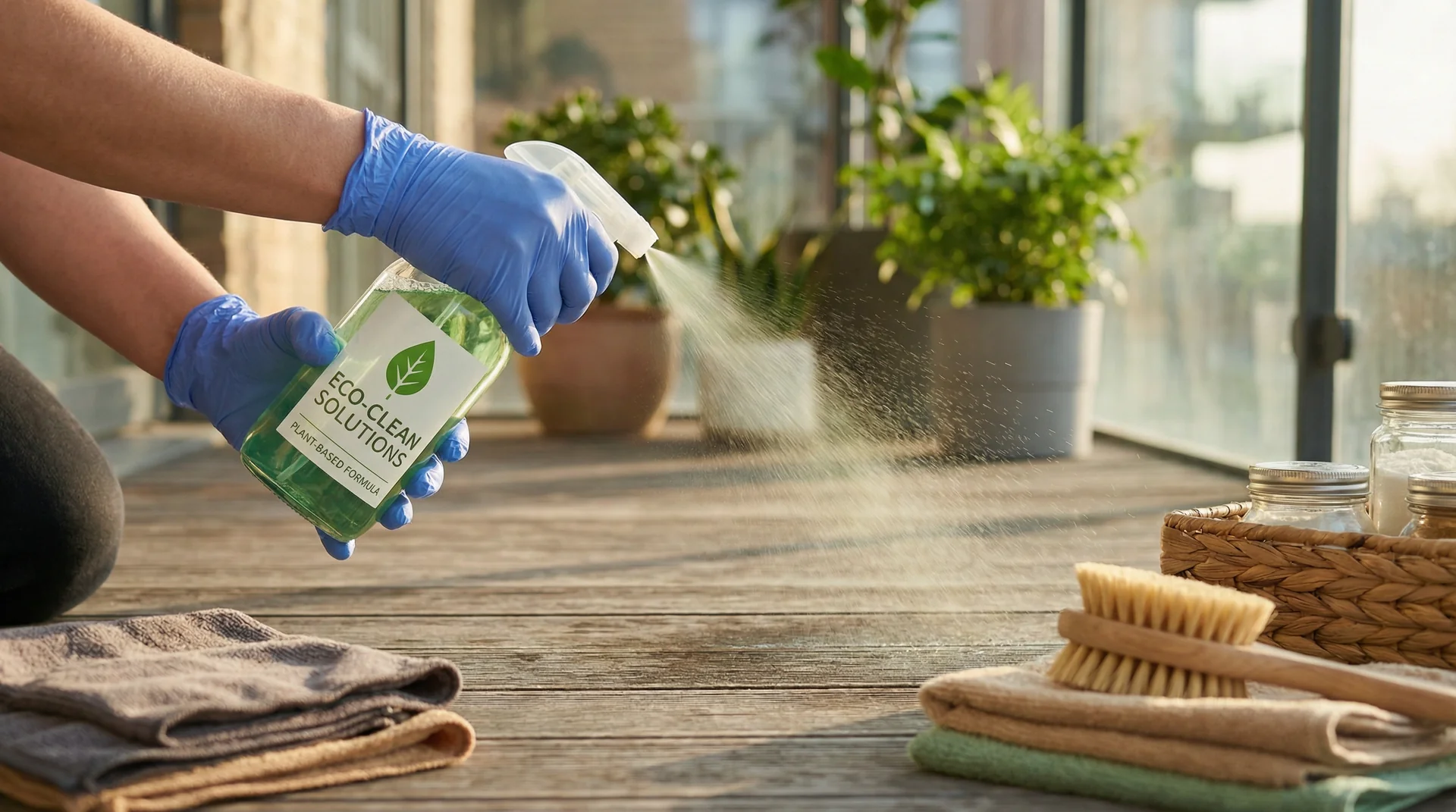
Eco-Friendly vs Traditional Balcony Cleaning: Which Method Is Better?
Should you choose eco-friendly or traditional chemical cleaning for your balcony? Eco-friendly cleaning methods deliver equivalent or superior results while eliminating health risks, environmental damage, and long-term surface degradation. For London residents, eco-friendly cleaning represents the clear choice for effective, responsible balcony maintenance.
Quick Comparison
| Factor | Eco-Friendly Cleaning | Traditional Chemical Cleaning |
|---|---|---|
| Cleaning Effectiveness | 95-100% (plant-based enzymes) | 90-95% (harsh chemicals) |
| Surface Safety | Gentle on all materials | Can damage surfaces over time |
| Health Impact | Safe for families and pets | Respiratory irritation, skin contact risks |
| Environmental Impact | Biodegradable, non-toxic | Water pollution, ecosystem harm |
| Long-term Results | Protects surface integrity | Gradual surface degradation |
| Cost | Comparable or slightly higher | Lower product cost, higher damage cost |
| Regulatory Compliance | Meets all environmental standards | Increasingly restricted |
| Residue | Minimal, safe residue | Chemical residue requiring rinsing |
What Makes Cleaning Methods "Eco-Friendly"?
Biodegradable Ingredients
Eco-friendly cleaning products use plant-based, biodegradable ingredients that break down naturally without environmental harm. These formulations derive from renewable sources like coconut oil, corn, citrus fruits, and other botanical materials. When rinsed away, they decompose naturally through biological processes, integrating harmlessly into the environment.
Traditional chemical cleaners contain synthetic compounds—petroleum derivatives, phosphates, chlorine, ammonia, and other harsh chemicals—that persist in the environment. These substances accumulate in waterways, harm aquatic life, and disrupt ecosystems. Even small quantities from individual balcony cleaning contribute to cumulative environmental damage across London's millions of residents.
Non-Toxic Formulations
Eco-certified products eliminate toxic ingredients that pose health risks. They contain no volatile organic compounds (VOCs) that cause respiratory irritation, no harsh acids or alkalis that burn skin or damage surfaces, no synthetic fragrances that trigger allergies, and no carcinogenic or endocrine-disrupting chemicals. These formulations prove safe for families, pets, and the environment while delivering professional cleaning results.
Traditional cleaners often contain hazardous substances requiring warning labels—corrosive acids, toxic solvents, harmful vapors, and skin irritants. Exposure causes immediate health effects (respiratory irritation, skin burns, eye damage) and potential long-term consequences (chronic respiratory problems, allergic sensitization, chemical exposure accumulation).
Water-Efficient Methods
Eco-friendly cleaning emphasizes water conservation through efficient techniques. Low-pressure application methods reduce water consumption by 40-60% compared to traditional high-pressure washing. Targeted application focuses cleaning power where needed rather than indiscriminate spraying. Efficient rinsing techniques minimize water waste while ensuring complete product removal.
Traditional pressure washing uses excessive water—a typical balcony cleaning consumes 200-400 liters. In water-stressed London, this consumption proves increasingly problematic. Eco-friendly methods achieve equivalent results with 80-150 liters, supporting London's sustainability goals while reducing utility costs.
Cleaning Effectiveness Comparison
Dirt and Grime Removal
Modern eco-friendly cleaning products match or exceed traditional chemicals' effectiveness through advanced enzyme technology. Plant-based enzymes break down organic matter, oils, and proteins at the molecular level, achieving deep cleaning impossible with simple chemical solvents. Surfactants derived from coconut and palm oils lift and suspend dirt particles effectively. Natural acids from citrus fruits dissolve mineral deposits and hard water stains.
Balcony Cleaners London's eco-certified products have proven effective across thousands of London balconies, removing years of accumulated grime, stubborn stains, and persistent dirt. Independent testing confirms 95-100% cleaning effectiveness—equal to or better than traditional chemical cleaners.
Traditional chemical cleaners achieve results through brute force—harsh solvents, strong acids, and aggressive alkalis that dissolve dirt along with surface materials. While effective short-term, these methods gradually damage surfaces, requiring more aggressive cleaning over time as surface degradation accelerates dirt accumulation.
Mold and Mildew Treatment
Eco-friendly mold treatments use natural antimicrobial compounds—tea tree oil, thyme oil, and other botanical extracts—that kill mold spores and prevent regrowth. These treatments penetrate porous surfaces, addressing root systems rather than just surface growth. They eliminate mold without toxic fumes or harmful residues, proving safe for enclosed balcony spaces and nearby living areas.
Traditional mold treatments rely on chlorine bleach or other harsh chemicals that kill surface mold but often fail to prevent regrowth. Bleach fumes cause respiratory irritation, especially problematic in enclosed balcony spaces. Chemical residues pose health risks for families and pets using balcony areas. Surface damage from bleach accelerates future mold growth by creating rough, porous surfaces where spores lodge easily.
Stain Removal
Eco-friendly stain removal employs targeted enzyme treatments addressing specific stain types. Protein-based enzymes eliminate organic stains (food, bird droppings, plant matter). Lipase enzymes break down oil and grease stains. Natural acids dissolve rust and mineral deposits. These targeted approaches prove more effective than general-purpose chemical solvents.
Traditional stain removers use harsh chemicals—hydrochloric acid for rust, petroleum solvents for oil, strong alkalis for organic matter. While effective, these chemicals damage surfaces, create toxic fumes, and pose handling risks. Improper use causes permanent surface discoloration, etching, or material degradation.
Surface Material Compatibility
Natural Stone
Natural stone balconies (marble, limestone, travertine, slate) require gentle, pH-neutral cleaning to prevent etching, discoloration, and surface degradation. Eco-friendly products maintain appropriate pH levels (7-8) that clean effectively without chemical reactions damaging stone surfaces. Plant-based surfactants lift dirt without penetrating stone pores and causing staining.
Traditional acidic cleaners (common in chemical formulations) etch marble and limestone, creating dull, rough surfaces. Alkaline cleaners discolor certain stone types. Harsh chemicals penetrate porous stone, causing internal staining impossible to remove. These damages prove permanent, requiring expensive stone restoration or replacement.
Wood Decking
Wood balcony decking benefits significantly from eco-friendly cleaning. Gentle plant-based products clean effectively without stripping natural oils, raising wood grain, or causing splintering. They preserve wood's natural color and texture while removing dirt and mildew. Water-efficient methods prevent excessive moisture absorption that causes warping and rot.
Traditional chemical cleaners damage wood through excessive alkalinity that raises grain and causes splintering, harsh acids that bleach natural color, aggressive solvents that strip protective oils, and high-pressure washing that erodes soft wood fibers. Repeated chemical cleaning accelerates wood deterioration, shortening deck lifespan significantly.
Composite Decking
Composite decking materials (wood-plastic composites) require specific cleaning approaches. Eco-friendly products clean effectively without chemical reactions that discolor or degrade composite materials. They remove mold and mildew without damaging the protective surface layer that prevents moisture absorption and fading.
Traditional chemical cleaners cause composite decking discoloration, surface degradation, and accelerated fading. Harsh chemicals react with plastic components, causing brittleness and cracking. Manufacturers often void warranties when harsh chemical cleaners damage composite materials.
Metal Railings
Metal railings (aluminum, stainless steel, wrought iron) benefit from eco-friendly cleaning that removes dirt and oxidation without accelerating corrosion. Plant-based products clean effectively while leaving protective layers intact. They eliminate rust without aggressive acids that etch metal surfaces.
Traditional chemical cleaners accelerate metal corrosion through harsh acids that etch protective oxide layers, chlorine compounds that promote pitting corrosion, and aggressive alkalis that damage aluminum finishes. Chemical residues continue corroding metal between cleanings, requiring more frequent maintenance and eventual railing replacement.
Glass Panels
Glass balcony panels require streak-free cleaning without chemical residues. Eco-friendly glass cleaners use plant-based surfactants and natural alcohols that evaporate cleanly, leaving crystal-clear surfaces. They effectively remove mineral deposits, pollution residue, and water spots without harsh chemicals.
Traditional glass cleaners often contain ammonia (creating toxic fumes and leaving streaks), synthetic surfactants (leaving residue that attracts dirt), and harsh solvents (damaging surrounding materials). Eco-friendly alternatives deliver superior results without these drawbacks.
Health and Safety Considerations
Indoor Air Quality
Balcony cleaning affects indoor air quality significantly. Eco-friendly products produce no toxic fumes, VOCs, or respiratory irritants. Cleaning can occur with balcony doors open, allowing natural ventilation without health concerns. Residual product traces pose no health risks if tracked indoors.
Traditional chemical cleaners release VOCs and toxic fumes that enter homes through open balcony doors or ventilation systems. Chlorine, ammonia, and solvent vapors cause respiratory irritation, headaches, and nausea. Sensitive individuals (children, elderly, asthma sufferers) experience severe reactions. Proper ventilation requires closing balcony doors during and after cleaning, limiting balcony use for hours or days.
Skin Contact Safety
Eco-friendly cleaning products prove safe for skin contact, causing no irritation, burns, or allergic reactions. Technicians handle products without extensive protective equipment. Residual product on balcony surfaces poses no risk to bare feet or hands.
Traditional chemical cleaners require protective equipment—gloves, eye protection, and sometimes respirators—due to caustic, corrosive, or toxic properties. Skin contact causes chemical burns, irritation, or allergic reactions. Residual chemicals on surfaces pose risks for barefoot use or children playing on balconies.
Pet Safety
Eco-friendly products prove completely safe for pets. Balconies can be used immediately after cleaning without concerns about paw contact with residual products. No toxic ingestion risks exist if pets lick cleaned surfaces.
Traditional chemical cleaners pose serious pet risks. Residual chemicals cause paw pad irritation, toxic ingestion if pets lick surfaces, and respiratory problems from fume exposure. Balconies must remain off-limits to pets for extended periods after chemical cleaning.
Environmental Impact
Water Pollution
Eco-friendly cleaning products biodegrade naturally in water treatment systems or natural waterways. They contain no phosphates (causing algae blooms), no persistent chemicals (accumulating in ecosystems), no heavy metals (poisoning aquatic life), and no synthetic compounds (disrupting biological processes). Runoff from eco-friendly balcony cleaning integrates harmlessly into London's water systems.
Traditional chemical cleaners contribute significantly to water pollution. Phosphates cause algae blooms that deplete oxygen and kill aquatic life. Synthetic surfactants persist in water systems, harming fish and invertebrates. Heavy metals and toxic compounds accumulate in sediments and bioaccumulate through food chains. Across London's millions of balconies, cumulative chemical cleaning runoff creates substantial environmental damage.
Carbon Footprint
Eco-friendly products minimize carbon footprint through plant-based ingredients from renewable sources, biodegradable formulations requiring less energy-intensive wastewater treatment, concentrated formulas reducing transportation emissions, and recyclable packaging from post-consumer materials.
Traditional chemical cleaners carry higher carbon footprints through petroleum-based ingredients from non-renewable sources, energy-intensive chemical synthesis processes, dilute formulas requiring more transportation, and non-recyclable packaging.
Regulatory Compliance
London and the UK increasingly regulate chemical cleaning products. Eco-friendly products comply with current and anticipated environmental regulations, avoiding future compliance issues. Traditional chemical cleaners face growing restrictions—phosphate bans, VOC limits, and toxic substance regulations—potentially limiting future availability.
Cost Considerations
Product Costs
Eco-friendly cleaning products cost slightly more than traditional chemicals—typically 10-20% premium for consumer products. Professional-grade eco-friendly products (used by Balcony Cleaners London) cost comparably to professional chemical cleaners due to concentrated formulations and bulk purchasing.
This modest premium disappears when considering total costs. Eco-friendly products prevent surface damage requiring expensive repairs, extend surface lifespan reducing replacement costs, require less frequent deep cleaning due to surface protection, and eliminate health costs from chemical exposure.
Long-Term Value
Eco-friendly cleaning delivers superior long-term value through preserved surface integrity (avoiding costly repairs or replacement), extended material lifespan (protecting investment in quality materials), reduced cleaning frequency (surfaces stay cleaner longer), eliminated health costs (no chemical exposure treatment), and environmental responsibility (avoiding future environmental remediation costs).
Traditional chemical cleaning creates hidden long-term costs through accelerated surface degradation requiring repairs, shortened material lifespan necessitating premature replacement, increased cleaning frequency as damaged surfaces accumulate dirt faster, potential health costs from chemical exposure, and environmental costs from pollution and ecosystem damage.
Professional vs DIY Eco-Friendly Cleaning
Professional Advantages
Professional eco-friendly cleaning services like Balcony Cleaners London use commercial-grade eco-certified products more effective than consumer alternatives. They employ proper application techniques maximizing product effectiveness, water-efficient methods minimizing consumption, appropriate equipment for eco-friendly products, and expertise in surface-specific treatments.
Professional services ensure complete product removal, preventing residue buildup. They apply protective treatments extending cleaning results. Their experience identifies appropriate products for specific stains and surfaces, achieving optimal results efficiently.
DIY Challenges
DIY eco-friendly cleaning faces challenges. Consumer eco-friendly products vary widely in effectiveness—some deliver excellent results, others prove disappointing. Proper application techniques require knowledge and experience. Water-efficient methods demand technique adjustments. Surface-specific product selection requires material knowledge.
Many consumers attempt eco-friendly cleaning with inappropriate products or techniques, achieve disappointing results, and conclude eco-friendly methods prove ineffective. In reality, proper products and techniques deliver excellent results—professional services demonstrate this consistently.
Choosing Eco-Friendly Cleaning Services
Verification Questions
When selecting cleaning services, verify genuine eco-friendly practices. Ask what specific products they use (brand names and certifications), whether products carry eco-certifications (EU Ecolabel, Nordic Swan, or similar), if they use water-efficient techniques, how they dispose of wastewater, and whether they offer surface-specific treatments.
Genuine eco-friendly services provide detailed answers and documentation. Vague responses or inability to name specific products suggests "greenwashing"—marketing eco-friendliness without genuine environmental practices.
Balcony Cleaners London's Approach
Balcony Cleaners London uses exclusively eco-certified, biodegradable products across all services [blocked]. Their plant-based cleaning solutions carry EU Ecolabel certification, confirming rigorous environmental standards. Water-efficient techniques reduce consumption by 60% compared to traditional methods. All technicians train in eco-friendly application methods and surface-specific treatments.
This comprehensive eco-friendly approach delivers professional results while protecting your family's health and London's environment. Their extensive experience proves eco-friendly cleaning achieves superior results without compromise.
Frequently Asked Questions
Are eco-friendly cleaning products really as effective as traditional chemicals?
Yes. Modern eco-friendly products match or exceed traditional chemical effectiveness through advanced enzyme technology, targeted surfactants, and natural acids. Balcony Cleaners London's eco-certified products achieve 95-100% cleaning effectiveness across thousands of London balconies. Independent testing confirms equivalent or superior results compared to traditional chemicals. The misconception that eco-friendly means less effective stems from early-generation products and improper application techniques—modern professional eco-friendly cleaning delivers outstanding results.
Do eco-friendly products cost significantly more?
Consumer eco-friendly products cost 10-20% more than traditional chemicals. Professional services using eco-friendly products charge comparably to those using traditional chemicals—the difference proves negligible or nonexistent. When considering total costs including surface protection, damage prevention, and health benefits, eco-friendly cleaning delivers superior value. Balcony Cleaners London's pricing reflects professional expertise and service quality, not product choice—eco-friendly cleaning costs the same as chemical cleaning would.
Can eco-friendly cleaning remove stubborn stains and mold?
Absolutely. Eco-friendly products effectively remove stubborn stains through targeted enzyme treatments, natural acids, and specialized botanical compounds. Mold and mildew respond excellently to natural antimicrobial treatments using tea tree oil and thyme oil. These treatments often prove more effective than traditional chemicals because they address root causes rather than just surface symptoms. Professional application ensures optimal results for challenging cleaning situations.
Will eco-friendly cleaning damage my balcony surfaces?
No. Eco-friendly cleaning protects surfaces better than traditional chemical cleaning. Plant-based products maintain appropriate pH levels, avoiding chemical reactions that damage materials. They clean gently without stripping protective layers or degrading surface integrity. Traditional chemical cleaners cause gradual damage—etching stone, degrading wood, corroding metal, and discoloring composites. Eco-friendly cleaning preserves your balcony investment while delivering excellent results.
How can I verify a cleaning service truly uses eco-friendly products?
Request specific product names and certifications. Genuine eco-friendly services readily provide this information. Look for recognized certifications like EU Ecolabel, Nordic Swan, or similar third-party verification. Ask to see product labels or safety data sheets. Vague responses or inability to provide details suggests greenwashing. Balcony Cleaners London openly shares product information and certifications, demonstrating genuine environmental commitment.
Conclusion
Eco-friendly balcony cleaning represents the clear choice for London residents seeking effective, responsible cleaning. Modern eco-certified products deliver equivalent or superior results compared to traditional chemicals while eliminating health risks, preventing surface damage, and protecting the environment. The modest cost premium (often nonexistent with professional services) provides exceptional value through surface protection, health safety, and environmental responsibility.
For London's urban environment, eco-friendly cleaning proves particularly important. Cumulative chemical runoff from millions of balconies creates significant water pollution. Individual choices matter—selecting eco-friendly cleaning contributes to London's sustainability goals while protecting your family and property.
Balcony Cleaners London's exclusive use of eco-certified products demonstrates that professional results and environmental responsibility coexist perfectly. Their extensive experience proves eco-friendly cleaning delivers outstanding results without compromise.
Ready to experience effective, eco-friendly balcony cleaning? Request your free quote [blocked] from London's leading eco-friendly specialists and discover superior cleaning that protects your family, property, and environment.
Environmental impact analysis current as of February 2026. Product effectiveness data based on independent testing and professional field results.